Embarking on Your 3D Character Animation Journey
Have you ever watched an animated film or game and felt a spark of wonder, imagining the countless hours and incredible talent behind bringing those characters to life? The magic of 3D character animation lies in its ability to tell stories, evoke emotions, and transport audiences to fantastical worlds. But becoming the architect of this magic requires dedication, skill, and the right guidance. This is where a comprehensive 3d character animation course becomes your invaluable compass, steering you from a curious enthusiast to a seasoned professional.
More than just learning software, a top-tier program is an immersive adventure. It's about nurturing your imagination, refining your artistic eye, and mastering the technical prowess needed to craft performances that resonate. Imagine yourself, fueled by passion and supported by industry veterans, transforming static models into dynamic, believable characters. Whether your dream is to animate for blockbuster films, captivating games, or innovative digital content, the foundational journey through specialized courses is your first, most crucial step.
Mastering the Fundamentals: Your First Steps into Animation
Every grand animation saga begins with a single, deliberate movement. For aspiring 3D character animators, this often means diving into the core software and principles that govern the art form. The initial stages of any effective 3d character animation course are designed to build an unshakeable foundation, ensuring you're not just moving pixels but truly understanding the craft.
Understanding Industry-Standard Software: Maya and Beyond
For many, the journey into 3D animation begins with Autodesk Maya. Often hailed as the industry standard, mastering Maya is akin to learning the universal language of 3D creation. Courses like Animation Mentor's Maya Workshop act as a launchpad, introducing you to the interface, essential tools, and fundamental workflows. It’s not merely about knowing where the buttons are; it's about grasping the core concepts of 3D space, keyframing, and scene management that underpin all subsequent learning. Familiarity with Maya sets you up for success, providing a versatile skillset applicable across various studios and projects.
While Maya holds a prominent position, the animation landscape is rich with other powerful tools. Programs like those found on Domestika increasingly offer pathways to master Blender, an open-source alternative gaining significant traction for its robust capabilities in modeling, rigging, and animation. Exploring different software options can broaden your horizons and align with specific career goals or personal preferences. For a deeper dive into the technical skills, check out our article on Mastering 3D Animation: From Maya Basics to Advanced Body Mechanics.
The 12 Principles of Animation: The Animator's Bible
Once you're comfortable with the software, the next critical phase involves internalizing the 12 Principles of Animation. These principles—developed by Disney animators in the golden age—are timeless guidelines for creating believable and engaging movement. A good 3d character animation course will meticulously break down concepts such as:
- Timing and Spacing: The essence of speed and movement, dictating how long an action takes and how frames are distributed to convey acceleration or deceleration.
- Squash and Stretch: Exaggerating form to emphasize speed, weight, and flexibility.
- Anticipation: Preparing the audience for an action, making movements more impactful.
- Arcs: Ensuring natural, curved paths of action for more organic movement.
- Weight: Conveying the heaviness or lightness of an object or character through its interaction with gravity and other forces.
Courses like Animation Mentor's Animation Basics are specifically designed to immerse students in these principles through hands-on exercises and expert feedback. This stage is crucial for learning to "walk before you run," ensuring that your animations, even simple ones, possess purpose and precision. These foundational elements are universal, transcending specific software to form the bedrock of compelling character performance.
From Mechanics to Performance: Bringing Characters to Life
With a solid grasp of software and core principles, the journey evolves into the intricacies of realistic movement and compelling character performance. This is where characters truly transcend being mere digital puppets and begin to embody personality and emotion.
The Art of Body Mechanics: Believability Through Movement
Body Mechanics is a pivotal stage in any advanced 3d character animation course. It’s the study of how the human (or any) body moves, interacts with its environment, and conveys weight, balance, and force. Programs delve deep into understanding:
- Anatomy and Kinesiology: How bones, muscles, and joints work together to create movement.
- Weight Distribution and Balance: Ensuring characters feel grounded and reactive to their actions.
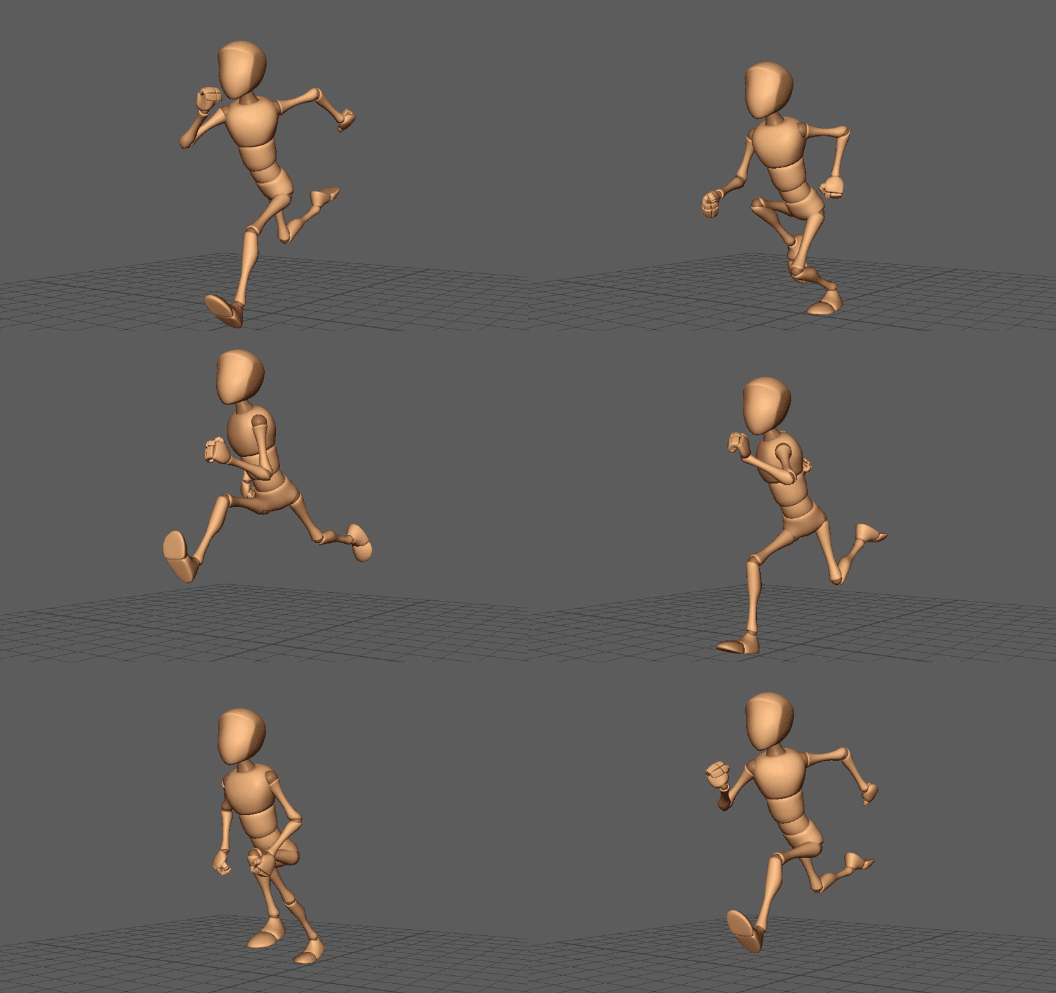
- Locomotion: Mastering realistic walk cycles, runs, jumps, and turns.
Through practical exercises and detailed mentor feedback, you'll learn to animate complex actions, making characters move and interact with their world in a natural, convincing way. This focus on believable movement is what separates amateur work from professional-grade animation.
Character Performance: Emotion and Storytelling
Beyond simply moving realistically, a professional animator brings characters to life with emotion, intention, and personality. This involves animating nuanced facial expressions, subtle gestures, and specific body language that tell a story without words. An advanced 3d character animation course will challenge you to:
- Convey Emotion: From joy to sorrow, anger to surprise, making characters feel what they are feeling.
- Develop Acting Choices: Understanding subtext and motivation to inform a character's actions.
- Sync Dialogue: Precisely matching character mouth movements to spoken words, adding realism and depth.
This is often where students begin to produce their first significant pieces for a professional portfolio. The goal is to craft performances that are not only technically sound but emotionally resonant, compelling the audience to connect with the character.
Curating Your Portfolio: The All-Important Demo Reel
The culmination of your hard work, skill development, and creative exploration in a 3d character animation course is the demo reel. This is not just a collection of your best work; it's your visual resume, your cinematic business card, and your ticket to landing that dream job. Top animation programs are acutely aware of this and structure their curriculum to lead directly to the creation of a polished, industry-ready demo reel. Mentors provide guidance on selecting the best shots, editing for impact, and presenting your unique animation voice.
A strong demo reel showcases your mastery of the 12 principles, your understanding of body mechanics, and your ability to imbue characters with life and personality. It should highlight your strengths and demonstrate your potential to contribute to a professional animation pipeline.
Tips for Choosing Your Ideal 3D Character Animation Course
With a multitude of options available, selecting the right 3d character animation course can feel overwhelming. Here are some key factors to consider:
- Curriculum Depth and Structure: Look for a progressive learning path that builds foundational skills before moving to advanced techniques. Does it cover the 12 principles, body mechanics, and performance?
- Mentorship and Feedback: Direct, personalized feedback from experienced industry professionals is invaluable. Programs like Animation Mentor are built on this mentorship model, fostering significant growth.
- Software Focus: Does the course teach industry-standard software like Maya, or offer alternatives like Blender? Ensure it aligns with your career aspirations.
- Community and Networking: A supportive peer community can enhance your learning experience and provide valuable networking opportunities post-graduation.
- Program Duration and Flexibility: Courses range from short, intensive workshops (e.g., 3 months for beginners) to comprehensive, longer programs (e.g., 18 months). Choose one that fits your schedule and learning pace.
- Demo Reel Support: How much emphasis and support does the program provide for creating a professional demo reel? This is paramount for job placement.
- Cost and Value: Evaluate tuition fees against the quality of instruction, resources, and career support offered.
To help you navigate these choices, consider reading Choose Your 3D Animation Journey: Beginner to Pro Programs Compared for a detailed analysis of different program structures.
Conclusion: Your Animated Future Awaits
The path to becoming a professional 3D character animator is a thrilling journey of continuous learning, artistic growth, and technical mastery. Enrolling in a top-tier 3d character animation course isn't just about acquiring skills; it's about joining a community, finding your voice, and transforming your passion into a viable career. From mastering the basics of Maya and the timeless 12 Principles to finessing intricate body mechanics and compelling character performances, each step brings you closer to realizing your dream. With dedication, persistence, and the right educational partner, your imagination will indeed become your greatest tool, and your characters will inspire, entertain, and truly come alive.